

 Lionel
Fifteen minutes by boat from the Croisette, an island planted with vines has belonged to monks for sixteen centuries. Thirty minutes’ drive inland, Grasse still distils the flowers that earned its perfume-making skills a place on UNESCO’s list. The secret to this part of the coast: spend less time on the Croisette and more on the water, in the lanes of the Suquet and on the roads to the hilltop villages. This is Cannes, the Lérins Islands and Grasse, the insider’s way.
Updated October 2026
At a glance
- Where: the Alpes-Maritimes, from Cannes and the Lérins Islands to Antibes and Juan-les-Pins, then inland to Mougins, Valbonne, Biot, Grasse, Cabris, Gourdon and the Gorges du Loup.
- When: April–June and September–October; winter for the markets and museums, away from the conferences and the Film Festival.
- Getting there: boats to the islands from the Vieux-Port (old harbour) in Cannes; a car is advisable for the hinterland villages.
- Best for: heritage lovers, perfume enthusiasts, walkers, and fans of covered food markets.
- Good to know: from mid-June to late September, access to the wooded massifs of the Alpes-Maritimes depends on the day’s wildfire risk.
Why Cannes is worth more than its glitz
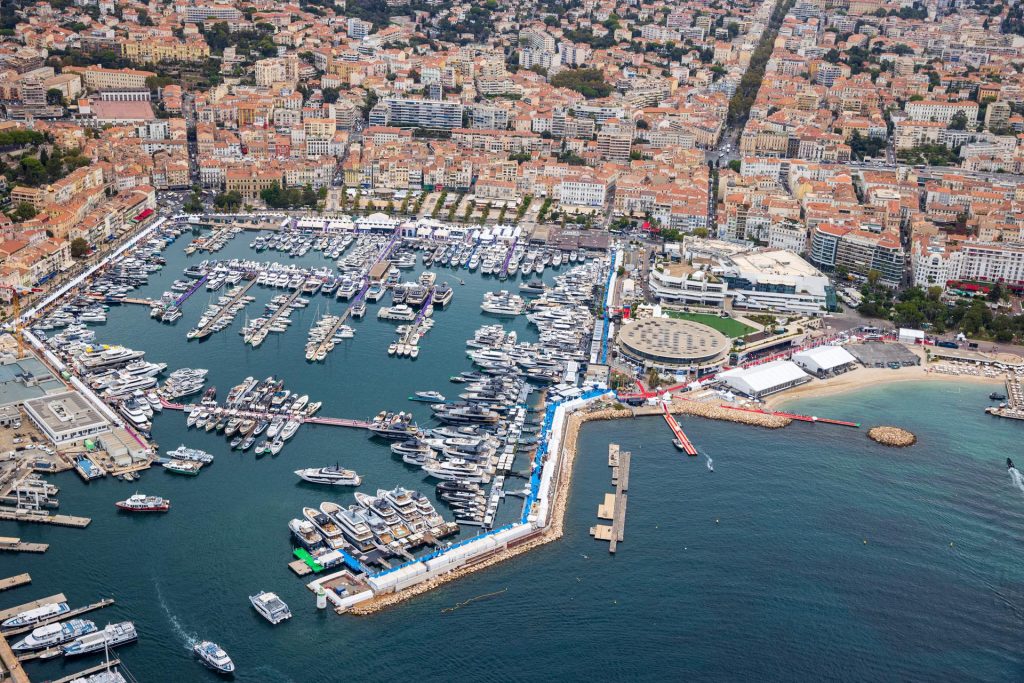
Cannes is famous for a few weeks a year: the Festival, the conferences, the yachts. The rest of the time it is a market and fishing town, backed by a medieval hill. Facing it lie two wooded islands where cars are not allowed.
Behind the coast, the land rises fast. In under an hour you go from the beaches to the Gourdon plateau, at 760 m, crossing the Pays de Grasse and its fields of perfume flowers on the way. Few parts of the Riviera offer such contrast over so short a distance.
The Suquet and Forville, the Cannes of the Cannois
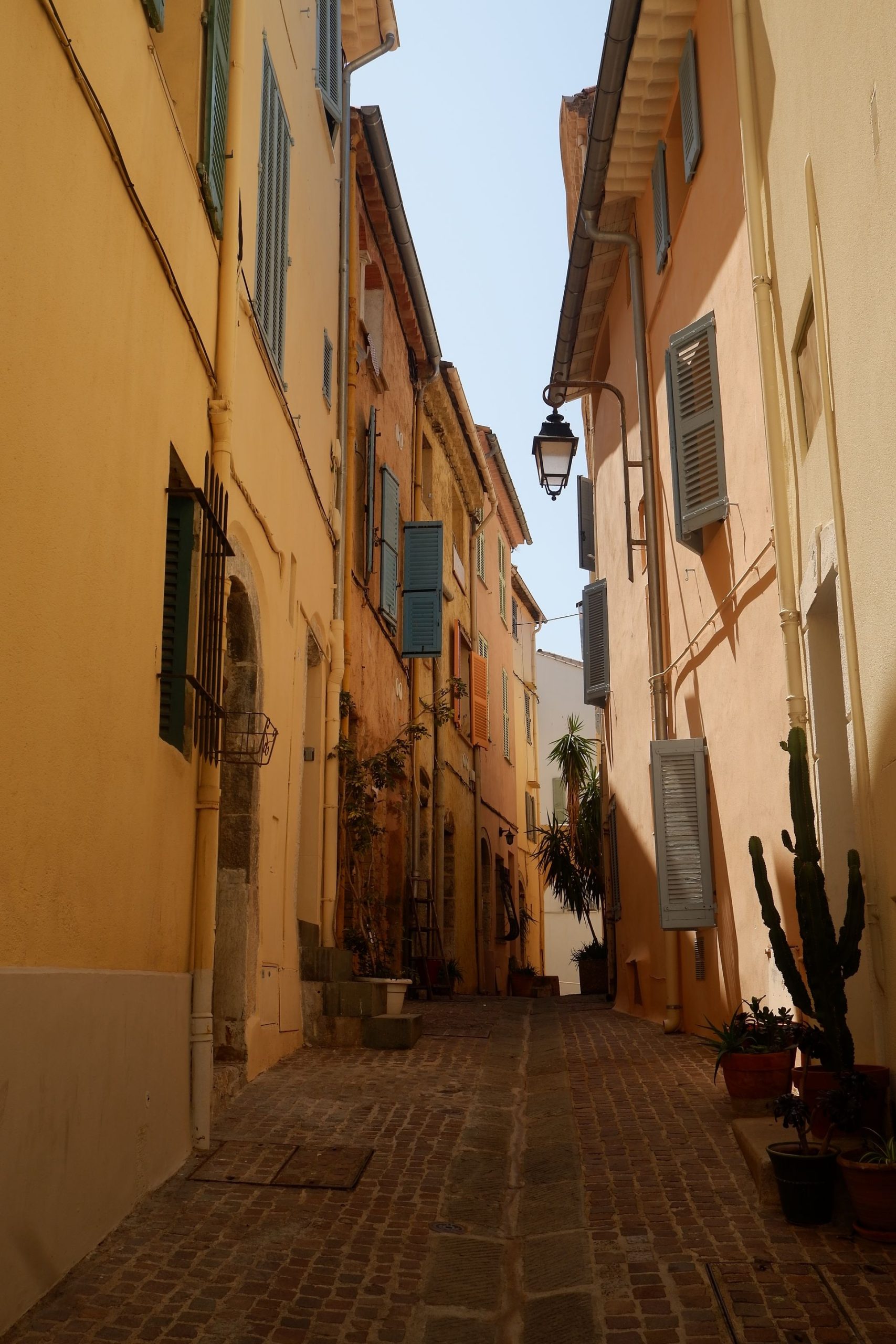
The Suquet is the hill where the town began, just above the Vieux-Port. You climb it on foot through sloping lanes that narrow as you go up. At the top, the church of Notre-Dame-d’Espérance and the 11th-century Château de la Castre look out over the bay.
- The Musée des Explorations du Monde: housed in the Château de la Castre, it brings together archaeology and ethnography collections. Its tower gives a 360° panorama over the town, the bay and the islands. Opening times are on the City of Cannes culture website.
- The Marché Forville: the covered market, in a 1930s hall, is open Tuesday to Sunday mornings. Fruit, vegetables, fish from the bay and flowers; the tourist office describes it as the market where chefs come to stock up.
- Mondays at Forville: the stalls make way for a flea market, from 7am to 5.30pm.
- The Allées de la Liberté flea market: on Saturdays and Sundays, under the plane trees near the Vieux-Port.
Insider tip: do Forville and the Suquet in the same morning. The market is at its best when it opens; then climb up via Rue Meynadier and the Suquet’s lanes before the heat sets in, and enjoy the view of the islands while the light is still soft.
The Lérins Islands: two islands, two moods
Sainte-Marguerite, forest and fort
The larger of the two islands is about 15 minutes by boat from Cannes. It is covered in Aleppo pines, stone pines, maritime pines, eucalyptus and cypress. Some 22 km of waymarked paths criss-cross it; the full circuit is around ten kilometres.
- The Fort Royal: this is where the Man in the Iron Mask was imprisoned. The Musée du Masque de Fer et du Fort Royal occupies the oldest part of the fort. It is closed on Mondays from October to May and open daily from June to September; entry is free for under-18s and students under 26.
- The Étang du Batéguier: the only saltwater lagoon on the Alpes-Maritimes coast, it is a bird reserve. An observation hide lets you spot terns, gulls and grey herons. Bring binoculars.
- The crossing: several companies serve the island from Cannes, as well as from Golfe-Juan, Juan-les-Pins and Mandelieu-la-Napoule. Tickets online or on the spot.
- Swimming: small coves and secluded beaches; if you are snorkelling, keep well clear of motorboats.
Saint-Honorat, the monks’ island
Smaller Saint-Honorat has been a monastic island since the year 410. Around twenty monks live here under the Rule of St Benedict, in the Abbaye de Lérins. They tend eight hectares of vines, entirely by hand, and produce wines and liqueurs.
- Don’t miss: the fortified monastery, a listed historic monument; chapels, some of which date back to the 10th century; and paths lined with olive trees and Aleppo pines leading down to small coves.
- The crossing: the only operator is Planaria, the monastic community’s own boat company, from Quai Saint-Pierre in the Vieux-Port. In 2026 the shuttles ran daily from 4 April to 1 November, roughly every hour; the service is advertised all year round, with fewer departures in winter. Book online or on 04 92 98 71 38.
- On the island: there are no bins any more, so take your rubbish back to the mainland. Dogs are allowed on a lead. The tower-monastery is not always open to visitors.
- For a retreat: the abbey guesthouse takes retreatants for stays of two nights to a week; it closes in November.
Insider tip: the two islands are not served by the same boats. For Saint-Honorat it is Planaria and nothing else. Choose one island per day: Sainte-Marguerite for the forest, swimming and the fort; Saint-Honorat for the silence and the vines. And aim for the first boat of the morning.
For more coves you can reach on foot or by boat, see our selection of secret beaches of the Côte d’Azur.
Antibes and the Cap d’Antibes on foot
Antibes has kept its ramparts and old centre, gathered around the covered Provençal market on Cours Masséna. From September to May it is open Tuesday to Sunday mornings; in June, July and August, every morning. In the afternoon, for part of the year, the same hall hosts a market of craftspeople and artists.
The Tirepoil path
The cape’s real secret is its coastal path. It starts from the large car park on Avenue André-Sella, near the Plage de la Garoupe, and runs past jagged rocks and small inlets before returning through the interior of the cape. The walk is easy, but there are steps and overhanging sections: comfortable shoes are essential.
- Closures: the path closes in bad weather. In 2026, a stretch of about 50 m below the Villa Eilenroc was closed until 30 September for cliff-stabilisation works: check its status with the town of Antibes.
- Dogs: allowed, according to the regional tourism board.
- By bus: there is a stop 10–20 minutes’ walk from the start.
Juan-les-Pins, on the other side of the cape, lives to the rhythm of its jazz festival in summer. Out of season, its fine-sand beach goes back to being a place for a quiet stroll.
Hilltop villages between the sea and perfume country
Mougins, the village of chefs
Perched at 260 m above the Bay of Cannes, Mougins is a village of fountains and wash-houses, from Place du Commandant-Lamy to Place des Patriotes. Picasso spent his last years at the Mas de Notre-Dame-de-Vie, next to the chapel of the same name, a listed monument. The Musée d’Art Classique brings together more than 700 pieces showing the influence of Egyptian, Greek and Roman civilisations on art. The village has several Michelin-starred restaurants.
Valbonne, the chequerboard village
Valbonne is a curiosity: founded in 1519 on a grid plan inspired by Roman towns, it has wide streets crossing at right angles, which is rare in Provence. The houses around the edge formed a rampart, and only four gates led into the village. The Église Saint-Blaise, a former Romanesque abbey church of the Chalais order, is a listed historic monument.
- Provençal market: Friday mornings, 8am to 1pm, all year round, on Place des Arcades.
- Flea market: the first Sunday of the month, on the same square.
- On foot: the Brague trail links Valbonne and Biot through the forest.
- Tours: the tourist office (04 89 87 73 32) offers free guided tours and an “Au fil des rues” walking booklet.
Biot, bubble glass and Fernand Léger
Biot is the glass village. The Verrerie de Biot, founded in 1956 by Éloi Monod, invented bubble glass (verre bullé) here; it holds the Entreprise du Patrimoine Vivant label, France’s official mark for heritage craft businesses. Glass-blowing taster sessions are by reservation only. Also in Biot, the Musée National Fernand-Léger occupies the Mas Saint-André, which the painter bought in 1955.
Insider tip: the Brague trail lets you walk between Valbonne and Biot under the trees. On a Friday, start with the Valbonne market in the morning and finish the afternoon in the glassblowers’ workshops in Biot.
More villages with character are gathered in our guide to the most beautiful villages of the Côte d’Azur.
Grasse, perfume capital
On 28 November 2018, UNESCO added the skills related to perfume in the Pays de Grasse to its Representative List of the Intangible Cultural Heritage of Humanity. The listing covers the growing of perfume plants, the knowledge and processing of natural raw materials, and the art of perfume composition.
The Musée International de la Parfumerie
Set in a 14th-century rampart and the Hôtel de Pontevès, the museum tells the story of perfume across five continents, from raw materials to marketing, with scent stations along the way.
- Address: 2 Boulevard du Jeu-de-Ballon.
- Opening: daily, with exceptional closures on the first Monday of several winter months (January, February, March, October, November, December).
- Free entry: on the first Sunday of the month from October to April, and all year round for under-18s.
- The museum gardens: at Mouans-Sartoux, more than 2 hectares of fields of centifolia rose, jasmine, tuberose, lavender and orange blossom, awarded “Jardin Remarquable” (outstanding garden) status in 2022.
The perfume houses and the old town
Three historic houses open their doors: Galimard, founded in 1747, Molinard, founded in 1849, and Fragonard, founded in 1926, whose historic factory is in the town centre. All offer tours or perfume-making workshops; book workshops in advance.
Don’t leave Grasse without stepping into the Cathédrale Notre-Dame-du-Puy, from the mid-13th century, free to enter and closed to visitors on Sundays. It holds three paintings attributed to Rubens or his workshop and Le Lavement des pieds (The Washing of the Feet), one of the few religious works by Fragonard, a native of Grasse.
Insider tip: keep an eye out for LVMH’s Journées Particulières open days, held in autumn in some years: the house of Dior then opens Les Fontaines Parfumées, its Grasse estate, on an exceptional basis. It is one of the rare chances to see behind the scenes of haute parfumerie.
Cabris, Gourdon and the Gorges du Loup
Cabris, the balcony
At about 545 m, Cabris gazes out to the Mediterranean from the esplanade of its old castle, of which only a few ruins remain. On Place Mirabeau, shady terraces face the panorama. The market is held on Fridays, on Place de la Mairie. For a 360° view, a walk leads to the top of the Croix de Cabris.
Gourdon, the eagle’s nest
Perched at 760 m above the Loup valley, Gourdon is one of the Plus Beaux Villages de France, the official list of France’s most beautiful villages. Its château, closed to the public, has a garden attributed to Le Nôtre. The lanes are home to the workshops of glassmakers, potters, perfumers and soap-makers.
The Gorges du Loup
The River Loup runs down from Andon towards the sea, cutting gorges between Gourdon and Courmes. The Cascade de Courmes, more than 40 m high, is a protected site. At the Saut du Loup, a private site, a viewing platform overlooks the Grande Marmite, a pool hollowed out by the water.
- The Chemin du Paradis: more than 8 km and about 520 m of ascent between Le Bar-sur-Loup and Gourdon, along the Loup canal and the Foulon aqueduct. Walking shoes and a hat.
- Cascade de Courmes: there is no parking by the road, and stopping there is dangerous. To get close, join a canyoning trip led by a qualified guide, from age 8.
- Family swimming: choose the Parc Départemental des Rives du Loup, further downstream, with picnic areas.
These landscapes feature among our natural wonders of the Côte d’Azur.
Food and markets: the calendar
According to the tourist offices. Days and locations are a guide only: check before you travel, especially around festivals.
- Tuesday to Sunday mornings: Cannes, the Forville, Gambetta and La Bocca markets; Antibes, the Provençal market on Cours Masséna (every morning in June, July and August).
- Monday: flea market at the Marché Forville.
- Tuesday and Friday mornings: neighbourhood market on Place Saint-Jin-Jin, Cannes.
- Friday morning: Valbonne, Place des Arcades; Cabris, Place de la Mairie.
- Saturday and Sunday: Allées de la Liberté flea market, Cannes.
- First Sunday of the month: Valbonne flea market.
- July and August: night markets in Cannes (Esplanade Pantiero on Mondays, La Bocca on Wednesdays, Promenade Jean-Hibert on Thursdays) and in Antibes and Juan-les-Pins.
To take home: a wine or liqueur from the Abbaye de Lérins, a perfume you composed at a Grasse workshop, a piece of Biot bubble glass. For the jasmine festivals and local traditions, read our feature on culture and traditions of the Côte d’Azur.
When to go (and why to try the off season)
- January–March: mimosa blooms on the nearby hills, and Grasse is the end of the Route du Mimosa. Museums and covered markets run as normal.
- April–June: the best time for the islands, the trails and the gardens at Mouans-Sartoux. Watch out for the Cannes Film Festival dates in May: accommodation is scarce and expensive.
- July–August: set off early for the islands and visit the villages late in the day. In early August, Grasse celebrates jasmine.
- September–October: the sea is still warm, the islands are quiet and the trails pleasant. The Fort Royal museum stays open, except on Mondays from October.
- November–December: Cannes belongs to the Cannois. On the first Sunday of the month, the perfume museum is free.
For more winter ideas, see our selection for enjoying the Riviera in winter.
Getting around and parking
- For the islands: the Vieux-Port in Cannes is a few minutes’ walk from the station. City buses serve the Laubeuf stop, at the boarding quay. Avoid driving in central Cannes.
- For the Cap d’Antibes: park early at the Avenue André-Sella car park, or come by bus.
- For the hinterland: a car is still the simplest way to string together Grasse, Cabris, Gourdon and the gorges. Drive up before 10am and come back down in the late afternoon.
- In the Gorges du Loup: never stop on the verge near the Cascade de Courmes.
- In summer: in the Alpes-Maritimes, from mid-June to late September, a daily map by commune sets access to wooded areas: green, access permitted; yellow and orange, access not recommended; red, access prohibited. All summer long, smoking, lighting fires and driving on forest tracks are banned. Check risque-prevention-incendie.fr/alpes-maritimes before a walk.
Where to stay
For the islands and markets, stay in the Suquet or near the Vieux-Port in Cannes, or in Antibes; for the Pays de Grasse, choose a B&B (chambre d’hôtes) or a country house (bastide) around Mougins, Valbonne, Cabris or Gourdon, and consider the Abbaye de Lérins guesthouse for a retreat.
Our hand-picked campsites in the area, on Yes I Camp: Les Gorges du Loup (Alpes-Maritimes), Les Pinèdes (La Colle-sur-Loup) and Camp de Loisirs du Lac (Montauroux).
See also all our campsites in Provence-Alpes-Côte d’Azur on Yes I Camp.
FAQ
How do you get to the Île Saint-Honorat?
Only with Planaria, the boat company run by the monks of the Abbaye de Lérins, from Quai Saint-Pierre in the Vieux-Port in Cannes. The island is about twenty minutes away. In 2026, sailings were daily and roughly hourly from April to early November.
Which Lérins island should you choose for a first visit?
Sainte-Marguerite for a full day: forest, coves, the Étang du Batéguier and the Fort Royal of the Man in the Iron Mask. Saint-Honorat for a peaceful half-day around the monastery and the vines. The two are not served by the same boats.
Is the Musée International de la Parfumerie free?
It is free for under-18s all year round, and for everyone on the first Sunday of the month from October to April. It is open every day except the first Monday of certain winter months.
Which day should you go to the Marché Forville?
Tuesday to Sunday, in the morning, for fresh produce. On Mondays the market gives way to a flea market. Come at opening time for fish from the bay.
Is the Cap d’Antibes coastal path open?
It is open all year round but closes in bad weather. In 2026, a short section below the Villa Eilenroc was closed until the end of September for safety works. Check with the town of Antibes before you set off.
Further reading
- The secret Estérel: red-rock coves, trails and villages
- Nice and its hill villages: an insider’s guide
- The secret Gulf of Saint-Tropez: an insider’s guide
- Menton, Roquebrune, Èze and Monaco: the Riviera to the Italian border
- The Mimosa Route from Bormes to Grasse in 3 days
- The French Riviera’s gardens: 12 to visit
- The French Riviera on screen: film locations to visit