




 Lionel
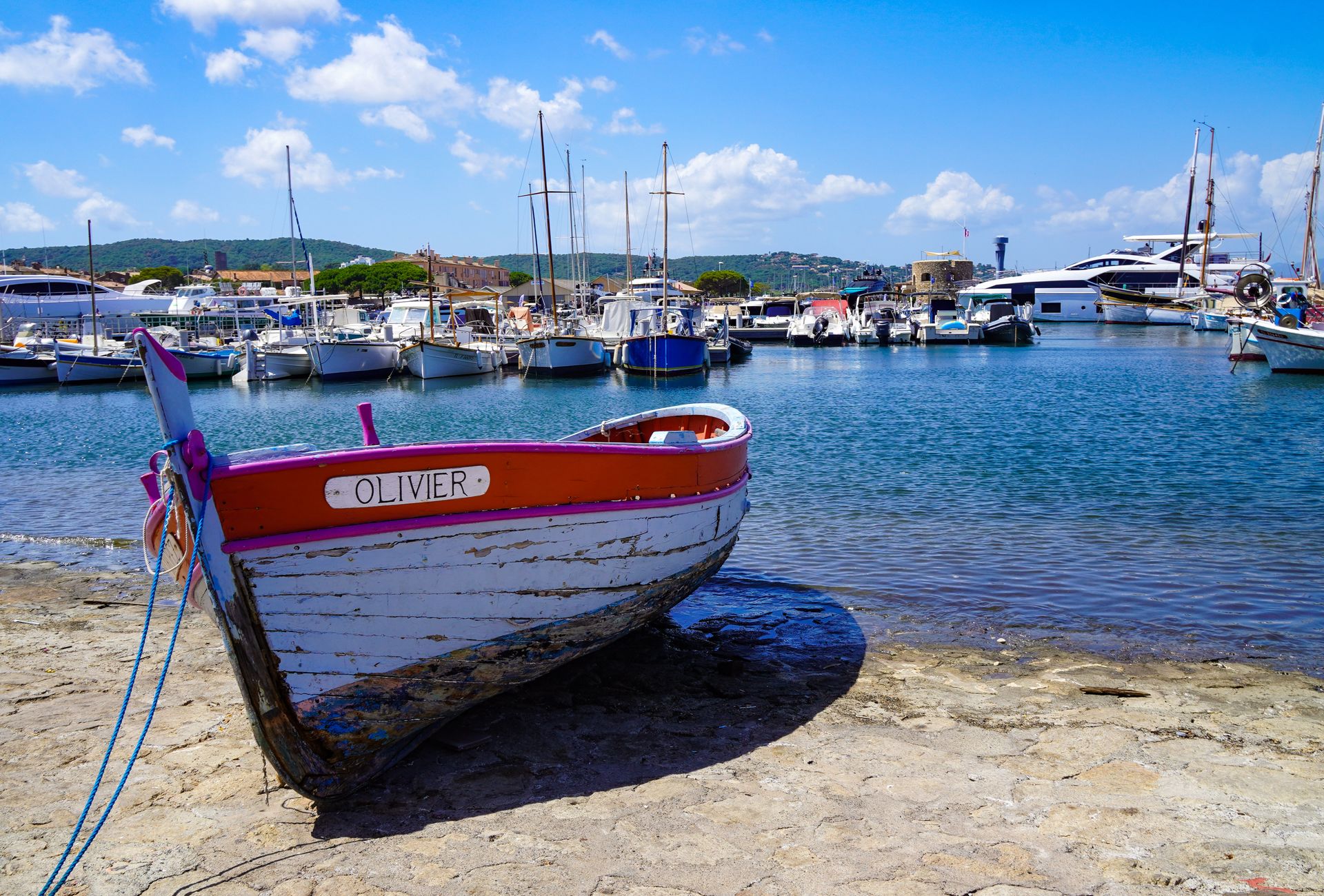
The Gulf of Saint-Tropez is about far more than the yachts in the Vieux Port or the private beach clubs of Pampelonne. Its real secret comes down to three things: a coastal path that threads past granite coves no car can reach, hilltop villages where you dine looking out to the Golden Isles, and a boat that drops you in the heart of Saint-Tropez without a single minute in traffic. This is the gulf as you experience it when you spend part of the year here.
Updated October 2026
At a glance
- Where: the Var, from Les Issambres in the north to La Croix-Valmer in the south: Sainte-Maxime, Saint-Tropez, Ramatuelle, Gassin, Grimaud, Port Grimaud, Cogolin and La Garde-Freinet.
- When: May–June and September–October for the sea without the crowds; winter for the villages and markets.
- Getting there: in summer, take the Sainte-Maxime ↔ Saint-Tropez shuttle boat rather than the road.
- Who it’s for: coastal walkers, lovers of hilltop villages, Provençal market enthusiasts, and couples and families who’d rather skip the bling.
- Good to know: from mid-June to the end of September, access to the Var’s forested hills depends on that day’s wildfire risk.
Why the gulf deserves better than its reputation
The gulf is a deep, east-facing bay backed by the Massif des Maures, the wooded hills that run behind this stretch of coast. On the northern shore, Sainte-Maxime and Les Issambres look across the water to Saint-Tropez. At the head of the bay sit Port Grimaud and the Marines de Cogolin. To the south lie the Saint-Tropez peninsula, Ramatuelle and Gassin, then La Croix-Valmer, which already tips towards the Bay of Cavalaire.
What people often forget is that much of the southern coastline is protected. The Conservatoire du Littoral, France’s coastal protection agency, looks after Cap Lardier and Cap Taillat. Vineyards run right down to the sea. And the hinterland, twenty minutes from the beaches, is a forest of cork oaks and sweet chestnuts where life still follows the seasons.
Secret Riviera is written partly from Sainte-Maxime. So this guide starts from a simple premise: the gulf is best discovered by sea, on foot and early in the morning.
Saint-Tropez, differently
Step away from the quayside and Saint-Tropez is still a genuine fishing village. In the morning, before the excursion boats arrive, the light on the ochre façades of the harbour is the same light that drew the painters here.
- The Place des Lices market: Tuesday and Saturday mornings, all year round, from 8am to 1pm according to the tourist office. Fruit and vegetables, charcuterie, a fish market in its own covered hall, plus second-hand stalls and crafts. Come when it opens, while the square is still cool under the plane trees.
- La Ponche: behind the harbour, the lanes of this old quarter lead down to a small beach and the start of the coastal path.
- The Citadel: it towers over the village, with views across the whole gulf to the summits of the Maures.
- La Grande Braderie: in 2026 this big street sale runs from 23 to 25 October, and the shuttle-boat company lays on extra departures from Sainte-Maxime.
Insider tip: for the Saturday market, catch one of the first shuttle boats from Sainte-Maxime. You step off on the harbour, a few minutes’ walk from the Place des Lices, with no hunting for a parking space. Check the day’s timetable on the Bateaux Verts website.
The Sainte-Maxime ↔ Saint-Tropez shuttle boat
This is the gulf’s number one trick. The Bateaux Verts company links Saint-Tropez with Sainte-Maxime, Les Issambres, Port Grimaud and the Marines de Cogolin. The crossing is short, and the view across the bay is worth the ticket on its own.
- Season: the company advertises the Sainte-Maxime – Saint-Tropez route as year-round; the gulf’s tourist office refers to a daily service ten months of the year. Check the winter closure dates before you travel.
- Frequency: one to four sailings an hour depending on the route and the season. In high season, the Sainte-Maxime – Saint-Tropez route can run day and night, weather permitting.
- Stops in Saint-Tropez: the Vieux Port and the Nouveau Port.
- Stops in Port Grimaud: the harbour master’s office and the church.
- Timetables and fares: on bateauxverts.com or on +33 (0)4 94 49 29 39.
The coastal path: the peninsula on foot
The Sentier du Littoral, often called the customs officers’ path (sentier des douaniers), loops around the Saint-Tropez peninsula and then heads on towards Ramatuelle and La Croix-Valmer. It is waymarked in yellow. You can walk it in sections, out and back, picking your stretch to suit your mood and fitness.
From Bonne Terrasse to Cap Camarat
From the municipal car park at Bonne Terrasse, in Ramatuelle, a rugged path runs above a granite shoreline to Cap Camarat. A track climbs up to the lighthouse, in service since 1831. The ground is rocky, so closed shoes are a must. Dogs are welcome on a lead.
From L’Escalet to the Cap Taillat isthmus
This is the gentlest section and one of the loveliest. From the car park at L’Escalet beach, it’s about 5.4 km there and back with less than 100 m of climbing, according to the regional tourist board. You follow the coast to the Pointe de la Douane, then cross onto the sandy isthmus that ties Cap Taillat to the mainland. From its small summit, an old lookout post, the view stretches to Cap Camarat in the east and Porquerolles in the west.
The two capes from Gigaro
For strong walkers: the “2 Caps” loop sets off from Gigaro beach, at the entrance to the Cap Lardier estate in La Croix-Valmer. The tourist office lists it at 14 km, around 5 hours and 700 m of ascent, graded difficult. You skirt Cap Lardier, La Briande beach and the Cap Taillat isthmus, then return along the forest tracks.
- Parking at Gigaro: paid from June to September in the car parks outside the blue zone.
- Dogs: on a lead within the Cap Lardier estate, and only to cross the beaches.
- Before you set off in summer: check the Var’s forest-access map, even for a coastal path, as the return leg often runs through the woods.
Insider tip: Ramatuelle’s own tourist office recommends visiting L’Escalet outside the peak season. In June or September, set off around 8am: you’ll find room in the car park and the Taillat isthmus almost deserted.
Lesser-known beaches and coves
Pampelonne, with its 4.5 km of fine sand, is still the big name. But the gulf has dozens of coves that cars simply can’t reach.
- L’Escalet (Ramatuelle): a small family beach with flat rocks and clear water, and the starting point for the path to Taillat.
- Bonne Terrasse (Ramatuelle): a sheltered cove at the foot of Cap Camarat, a world away from the bustle of Pampelonne.
- Gigaro, La Briande, Sylvabelle (La Croix-Valmer): sand, turquoise water and vine-covered hills. La Briande can only be reached on foot, via the coastal path.
- Pointe des Sardinaux (Sainte-Maxime): a protected natural site with a small, wild pine wood, ideal for a picnic or a spot of snorkelling.
- La Nartelle (Sainte-Maxime): a long sandy beach beyond the cliffs that run down from Les Issambres. Sainte-Maxime has around ten kilometres of beaches, several of them Blue Flag.
- The coves of Les Issambres: sand, little calanques (rocky inlets) and small rocky bays along the coastal path.
For more hidden beaches along the whole coast, see our selection of secret beaches of the Côte d’Azur.
Les Issambres: the coastal path and the Roman fish tank
Part of the commune of Roquebrune-sur-Argens, Les Issambres close off the gulf to the north. Their coastal path, flat and shaded in places, is one of the easiest on the Var coast.
- Start: the Pointe de l’Arpillon car park.
- Distance: 4.6 km there and back, about 2 hours 30 at an easy pace, with almost no climbing.
- Don’t miss: the Gallo-Roman vivier (fish tank) at the Pointe de la Caille, listed as a historic monument in 1939. The Romans kept fish and shellfish alive here.
- Take care: some rocky stretches are slippery; avoid the path in strong wind or heavy swell.
Sainte-Maxime, the locals’ way
Sainte-Maxime faces Saint-Tropez but lives at its own pace. The covered market on Rue Fernand Bessy, less than 200 metres from the harbour, opens in the mornings for most of the year; in high summer it also reopens in the late afternoon, Tuesday to Saturday. Down at the harbour, fishermen sell their catch straight from the stall.
- La Tour Carrée: the oldest building in town, on the seafront.
- The Myrtes botanical garden: a stone’s throw from the promenade.
- The week’s markets: Monday at the Patio Fleuri, Thursday in the centre (Place and Rue du Marché, Place Colbert, Rue Courbet), Friday on Place Jean-Mermoz.
- The Col du Gratteloup road: it climbs through the Maures towards Le Plan-de-la-Tour. A green escape a quarter of an hour from the beach.
The hilltop villages
Gassin, the gulf’s balcony
Listed among the Plus Beaux Villages de France (the Most Beautiful Villages of France), Gassin sits on a rocky spur some 200 metres up. Place deï Barri looks out over the Bay of Cavalaire, Pampelonne and the Golden Isles: this is the place for dinner at sunset. Don’t miss the Androuno, billed as the narrowest street in the world, or the viewpoint indicator on the Montée Saint-Joseph, from which you can see the Estérel and, on a clear day, the Alps. The tourist office advertises a free guided tour on Mondays from April to October.
Ramatuelle, the spiral village
Ramatuelle coils around its hill: spiralling lanes, stairways, flower-decked walls and the Porte des Sarrasins. The Provençal market is held on Place de l’Ormeau on Thursdays and Sundays. For the view, head up to the Moulins de Paillas windmills, at 325 metres, between Gassin and Ramatuelle: Pampelonne on one side, the Bay of Cavalaire on the other. In summer, the Ramatuelle festival, with its well-known jazz strand, brings the village to life.
Insider tip: since 2025, the Cap Camarat lighthouse has been open to visitors in season, by reservation only. Ask at the Ramatuelle tourist office (+33 (0)4 98 12 64 00): few visitors know about it.
Grimaud and its castle
Grimaud’s medieval castle, a listed historic monument, crowns the village. It once guarded the way into the Freinet territory. Further down, the Saint-Roch windmill gives a fine view over the Maures and the plain. A lift runs from the tourist office up to Place Neuve, handy for starting your visit at the top. Market on Thursdays, Place de l’Église.
La Garde-Freinet, the village of the Maures
Set back from the coast, La Garde-Freinet is the village of cork oaks and chestnut trees. Above the rooftops, Fort Freinet, at 450 metres, still has dwellings and a ditch cut into the rock; the panorama takes in the Maures and the Argens plain. The heritage centre (conservatoire du patrimoine) tells the story of cork, basket-making and silkworm rearing. Market on Wednesdays and Sundays. In October, the chestnut festival (Fêtes de la Châtaigne) draws people from all over the gulf.
More characterful villages in the region feature in our guide to the most beautiful villages of France on the Côte d’Azur.
Port Grimaud and Cogolin, the head of the gulf
Port Grimaud, the lakeside town
Designed in 1966 by the architect François Spoerry, Port Grimaud spreads over 90 hectares of canals and colourful houses. Only part of it is open to visitors, on foot or by boat, to protect residents’ peace and quiet. The Saint-François-d’Assise church is free to enter; its roof terrace, for which there’s a charge, has the best view over the town and the bay. Two markets a week, on Thursdays and Sundays, from April to October.
Cogolin, the craftspeople’s town
Cogolin keeps rare skills alive: briar pipes, reeds for wind instruments cut from Provençal cane, and carpets. The old village has kept its vaulted passages, the Clock Tower and the Saint-Sauveur church. From Place Bellevue, a viewpoint indicator takes in the whole gulf. Markets on Wednesday (Place Victor-Hugo) and Saturday (Place de la République) mornings.
Food and markets: the weekly calendar
The gulf runs to the rhythm of its markets. Here is the weekly schedule, based on the gulf’s tourist office and official listings. Times can vary, so check before you go.
- Monday: Sainte-Maxime (Patio Fleuri).
- Tuesday: Saint-Tropez (Place des Lices).
- Wednesday: Cogolin, La Garde-Freinet.
- Thursday: Sainte-Maxime (centre), Grimaud, Ramatuelle, Port Grimaud (April to October).
- Friday: Sainte-Maxime (Place Jean-Mermoz).
- Saturday: Saint-Tropez (Place des Lices), Cogolin.
- Sunday: La Croix-Valmer, La Garde-Freinet, Ramatuelle, Port Grimaud (April to October).
To take home: a rosé from the peninsula’s estates, honey and chestnuts from the Maures, and a tarte tropézienne. This cream-filled brioche was born in Saint-Tropez; you’ll also find it in Cogolin. In La Croix-Valmer, where the vines run down to the sea, several estates open their cellars for tastings.
To go further into local food and traditions, read our feature on the culture and traditions of the Côte d’Azur.
When to come (and why to try the off-season)
- April–June: the best season for walking. The rockroses are in flower, the sea is warming up and the car parks are empty. Port Grimaud’s seasonal markets start again in April.
- July–August: the gulf is saturated. If you do come, live against the clock: beach at 8am, a siesta through the hottest hours, a hilltop village in the evening. And check the forest-access map every day.
- September–October: the sea stays warm, the light turns golden and the grape harvest brings the estates to life. Late October brings Saint-Tropez’s Grande Braderie and La Garde-Freinet’s chestnut festival.
- November–March: Pampelonne turns wild again and the villages belong to their residents. The Place des Lices market and Sainte-Maxime’s covered market run all year. Ideal for hiking in the Maures, with no access restrictions.
Getting around and parking: how to beat the traffic
In summer, the road into Saint-Tropez clogs up fast. Almost all of the gulf’s traffic funnels into the La Foux junction at the head of the bay, then heads to the village along a road that quickly jams. Two simple rules change everything.
- Leave the car on the other side of the gulf. Park in Sainte-Maxime, Les Issambres, Port Grimaud or the Marines de Cogolin and cross by shuttle boat. You arrive straight into the Vieux Port.
- Shift your timings. The late-afternoon rush back from the beaches is the worst time to be on the road. Leave before 9am, come back after dinner, or stay in the village for the evening.
- In Cogolin in summer: a free municipal shuttle bus links the Platanes car park with the town centre on market mornings (until 29 August in 2026, every 20 minutes from 9am to 1pm).
- Beaches in the south of the peninsula: the car parks at L’Escalet, Bonne Terrasse and Gigaro fill up early. Arrive in the morning, or use a bike for short distances.
Insider tip: for a day in Saint-Tropez in July or August, combine the shuttle boat with walking. Land at the Vieux Port, walk to La Ponche and follow the coastal path: you get the peninsula’s coves without ever touching your car.
Where to stay
To enjoy the gulf without battling the road, stay in Sainte-Maxime or Les Issambres, both linked to Saint-Tropez by shuttle boat, or in a hilltop village such as Gassin, Ramatuelle or Grimaud; the peninsula’s campsites and the guest rooms on wine estates make an appealing alternative to the harbour hotels.
Our hand-picked campsites in the area, on Yes I Camp: Les Tournels (Ramatuelle) and Golfe de St Tropez by Parc Saint James (Gassin).
See also all our campsites in Provence-Alpes-Côte d’Azur on Yes I Camp.
FAQ
Does the Sainte-Maxime – Saint-Tropez shuttle boat run all year?
Bateaux Verts advertises sailings to Saint-Tropez from Sainte-Maxime all year round, with far more frequent departures in summer. The gulf’s tourist office refers to a ten-month service, so check the day’s timetable on bateauxverts.com before setting out in winter.
Can you go hiking in the gulf in high summer?
Yes, but with conditions. From mid-June to the end of September, the Var prefecture (the département’s state authority) publishes a forest-access map every evening for the following day. Depending on the risk level, access may be advised against or banned. Check it on risque-prevention-incendie.fr before any outing, and set off early to avoid the heat.
What is the quietest beach near Saint-Tropez?
Outside July and August, L’Escalet, Bonne Terrasse and the coves along the coastal path stay peaceful. In high summer, go for beaches you can only reach on foot, such as La Briande near Cap Lardier, and arrive before 9am.
Which day should I go to the Saint-Tropez market?
The Place des Lices market is held on Tuesday and Saturday mornings, all year round. Saturday is the liveliest. To avoid the crowds and the parking, come early by shuttle boat.
Which hilltop village is best for sunset?
Gassin, from Place deï Barri, for its view over the Bay of Cavalaire and the Golden Isles. The Moulins de Paillas, between Gassin and Ramatuelle, offer an even wider panorama over Pampelonne.
Further reading
- Bormes, Le Lavandou and the Maures: an insider’s guide
- Porquerolles, Port-Cros and the Golden Isles: a practical guide
- The secret Estérel: red-rock coves, trails and villages
- Cannes, the Lérins Islands and Grasse beyond the glitz
- The secret beaches of the French Riviera
- The most beautiful hill villages of the French Riviera
- The French Riviera on screen: film locations to visit