



 Lionel
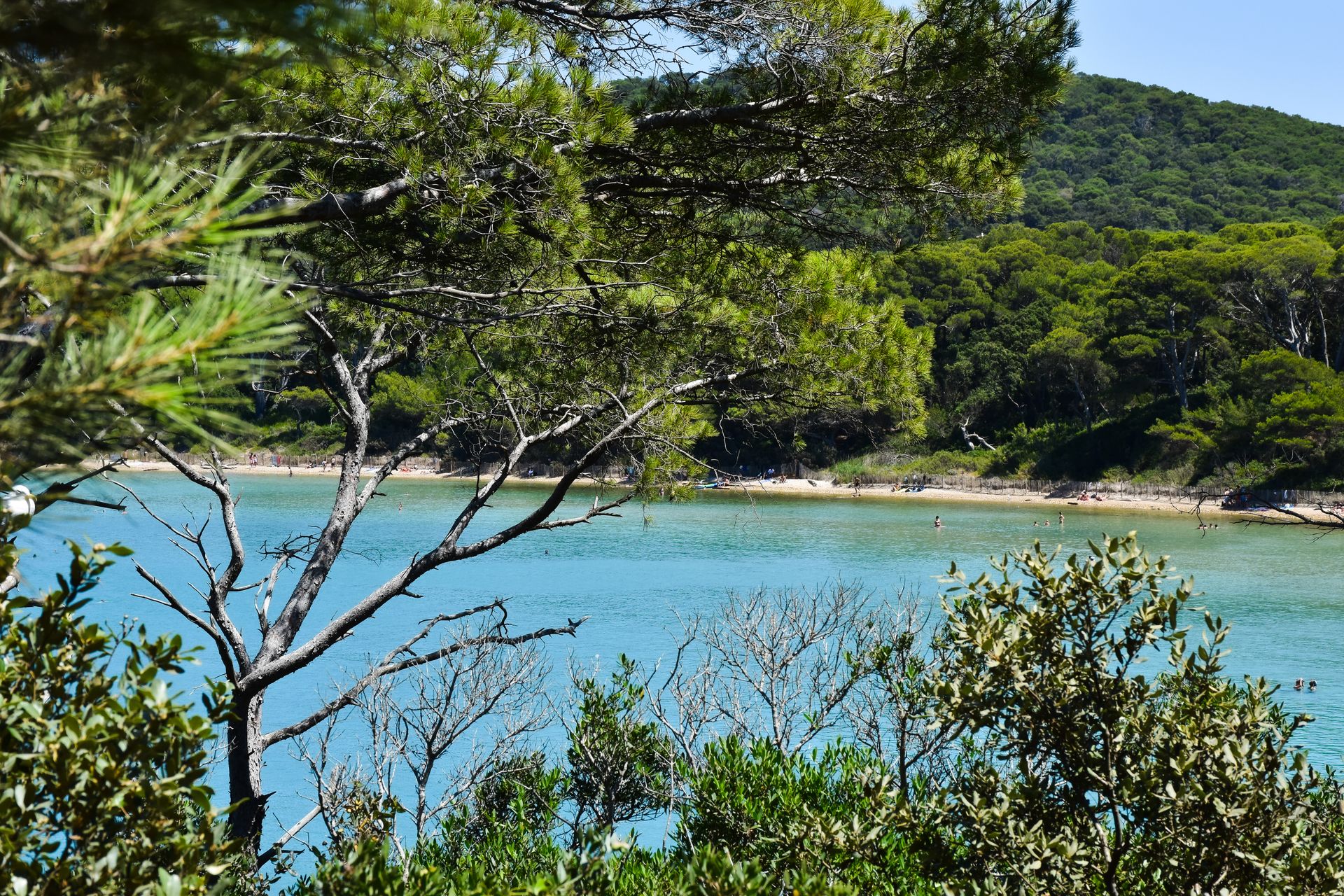
For Porquerolles in high summer, the secret isn’t the island, it’s the ticket: the cap of 6,000 visitors a day is enforced through the number of seats on the boats, not at a turnstile. Book your crossing online, ride the bus to La Tour Fondue for free with your e-ticket in July and August, and save Port-Cros for a weekday, with a mask and snorkel in your bag.
Updated October 2026
At a glance
- Where: Hyères and the Giens peninsula, Porquerolles, Port-Cros and the Île du Levant; plus Bandol and Sanary.
- When: May, June and September for the best balance of warm sea and calm; October to have the islands almost to yourself.
- Getting there: La Tour Fondue for Porquerolles, the port of Hyères for Port-Cros and the Levant, with seasonal departures from other Var ports.
- Booking: strongly advised for Porquerolles crossings in summer; numbers were regulated from 29 June to 30 August in 2026.
- Who it’s for: leisurely cyclists, hikers, snorkellers and anyone curious about contemporary art.
Why the Golden Isles are special
Off Hyères, three islands make up the archipelago of the Îles d’Or, the Golden Isles: Porquerolles, Port-Cros and the Levant. From a distance they look alike; up close they have almost nothing in common. Porquerolles is the inhabited island, with its village, vineyards and cycle tracks. Port-Cros is the historic heart of the National Park, created in 1963, and can only be explored on foot. The Levant is largely military, with a small naturist village.
The mainland deserves just as much attention. The Giens peninsula, tied to the coast by a double tombolo (twin sandbars), shelters salt pans where flamingos gather. And further west, Bandol and Sanary offer another gateway to the islands.
This guide helps you plan it all: which island for what, which ports, which rules, and what time to leave.
Rules to know before you board
Visitor caps on Porquerolles
Since 2021, the Toulon Provence Méditerranée metropolitan authority, the town of Hyères, Port-Cros National Park and the ferry companies have capped summer visitor numbers on Porquerolles at around 6,000 a day. In 2026, the shuttle-booking period ran from 29 June to 30 August.
- There are no checks when you arrive on the island: the cap corresponds to the number of seats offered on the boats.
- Booking isn’t compulsory, but it is strongly recommended in summer, especially at weekends and on public holidays.
- TLV-TVM e-tickets are shown, with their QR code, before boarding.
- Check the exchange and refund terms when you buy.
Smoking ban and wildfire risk
On the Park’s islands, smoking is strictly banned on beaches, on paths and in natural areas, with a fine of 135 to 1,500 euros according to the National Park. On Port-Cros, you may only smoke in the village.
In summer, access to the Var’s forested areas is regulated according to wildfire risk, islands included. A daily map is published in the late afternoon, from 5.30pm, on the Var prefecture’s website (the département’s state authority) and on risque-prevention-incendie.fr. Check it the evening before your crossing.
Insider tip: in July and August, buy your TLV-TVM e-ticket for Porquerolles before leaving your accommodation. It entitles you to free travel on bus lines 67 and E67 to La Tour Fondue, from 1 July to 31 August 2026. That way you avoid the packed car park on the peninsula.
Porquerolles, differently
Porquerolles is about 7 km long and 3 km wide, or 1,250 hectares. It is the largest of the Golden Isles. It has been classified as a core area of the National Park since 2012 and has around fifty kilometres of waymarked paths.
By bike, but not just anyhow
Cycling is the best way to discover the island. The hire shops in the village offer standard and electric bikes. Cycling is regulated in the core of the Park: ask the hire shops which tracks are permitted, and stay on the waymarked routes.
The Park offers several circuits. The forts circuit, the most accessible, is an 8.8 km loop from Place d’Armes, about an hour, with 143 metres of ascent. It passes Fort du Lequin, Fort de l’Alycastre, Fort de la Repentance and the Moulin du Bonheur windmill, before climbing back up to Fort Sainte-Agathe.
- Fort Sainte-Agathe: a panoramic terrace and a Park visitor area, with self-guided or guided visits.
- Steep, gravelly descents in places: keep your speed down.
- Take water: places to stock up are concentrated in the village.
The Villa Carmignac
Set on the Courtade track, the Carmignac foundation stages a contemporary art exhibition each season, from April to early November. In 2026, the exhibition Sea, Pop & Sun ran from 25 April to 1 November, closed on Mondays. Its garden, which holds France’s Jardin Remarquable label, mixes endemic plants with sculptures created by artists in residence on the island. Book online on the foundation’s website.
For more exceptional gardens, see our article on the garden side of the Côte d’Azur.
Port-Cros, the island on foot
Port-Cros is the historic heart of Port-Cros National Park. Here there are no cars, no bikes and no scooters. The island is explored on foot, on around thirty kilometres of waymarked paths, from 30 minutes to 7 hours of walking.
The trails
- Route des Forts: 3 km, about 1 hour, easy.
- Sentier des Plantes (plant trail): 4.4 km, about 45 minutes, with steep sections.
- Sentier des Écrivains (writers’ trail): 8 km, about 3 hours, energetic.
- Sentier de la Croix: 8 km, about 3 hours, steep.
- Port-Man loop: 12 km, about 4 hours, with an easier return through the interior.
Outside the village there are no restaurants and no cash machines. Bring water, a picnic and cash. Pushchairs aren’t suited to the paths.
The La Palud underwater trail
This is the most unusual experience in the archipelago. From La Palud beach, a marked route of six submerged buoys, fitted with information panels, introduces the different marine habitats, including the posidonia seagrass meadow. The depth never exceeds 12 metres and you wade in gently from the beach.
- In 2026, the trail was marked out from 15 June to 15 September, free and open to all.
- Allow 30 to 40 minutes in the water; bring your own mask, fins and snorkel.
- La Palud beach is about 30 minutes’ walk from the harbour via the Estissac path.
- Avoid swimming in a strong mistral, the cold north-westerly wind, and keep an eye out for jellyfish at certain times.
- Take nothing away: no sea urchins, shells, sand or seaweed.
Rules specific to Port-Cros
- Dogs must be kept on a lead and are allowed only in the village and as far as the dam, not on the beaches or the other paths.
- No fires, no camping or wild camping, no drones.
- Leaving the waymarked paths and picking plants are banned.
- The islets of Bagaud and La Gabinière and the Rascas rock are strict nature reserves: no public access.
- By boat, anchoring is banned in the Bagaud channel, where you moor on eco-friendly buoys.
Insider tip: take the first boat to Port-Cros and walk straight to La Palud. You’ll have the beach and the buoys before the next boats arrive, and the whole afternoon for a hiking trail.
The Île du Levant, the archipelago’s other face
The Levant is an island apart. The civilian area makes up less than 10% of its surface; the rest belongs to the State and is occupied by the Direction Générale de l’Armement, the French defence procurement agency. This military zone is off-limits to the public.
The open part is concentrated around the village of Héliopolis, known for its naturist history. Naturism is permitted everywhere except at the harbour. Plage des Grottes, the village’s only beach, is reserved for naturists: swimsuits are banned there.
- Points of interest: the Maternité statue, the calanques (rocky inlets) of Bain de Diane and Pierres Blanches, Cap de la Cantine and the Arbousiers nature reserve.
- Le Point du Jour, the island’s highest point, opens up views of Port-Cros, Porquerolles and Cap Bénat.
- The hills may close on red-alert days for wildfire risk.
For more addresses, read our selection of the best naturist beaches on the Côte d’Azur.
Beaches and coves: how to choose
On Porquerolles
- Plage d’Argent: about 10 minutes by bike from the village, along a drivable track. Beach bar-restaurant in summer. The most convenient, so the busiest.
- Plage Notre-Dame: about 25 minutes by bike. A long sandy bay, wilder in feel.
- Plage du Langoustier: about 45 minutes by bike, to the west. The most open.
- Plage de la Courtade: on the edge of pine woods and vineyards, on the forts circuit.
On the mainland
- L’Almanarre: at the foot of Giens’s western tombolo, a big, wind-exposed beach. Animals are banned here by prefectoral order.
- The Giens peninsula: a jagged, rocky coastline; in summer, check access to natural areas on the Var prefecture’s map.
Our other swimming spots are gathered in the article on secret beaches of the Côte d’Azur.
Hyères and the Giens peninsula
The Route du Sel and the Pesquiers salt pans
On the western tombolo, the Route du Sel (salt road) links L’Almanarre with the peninsula over 4 km, alongside the Pesquiers salt pans. Halfway along, an observation point lets you watch flamingos, egrets and herons.
- The road is closed to cars from November to April. In 2026 it was open to traffic from 18 April to 9 November.
- The barriers may close earlier in strong winds.
- Cycling there is not advised in summer because of the traffic; go during the car-free period instead.
La Tour Fondue and Fort du Pradeau
At the tip of Giens, the La Tour Fondue landing stage is the gateway to Porquerolles. The fort above it, Fort du Pradeau, was built in 1634 at the request of Cardinal Richelieu to protect the Hyères roadstead. Restored by Port-Cros National Park, it houses a Park information space.
Right next door, at the Pointe du Bouvet, an archaeological underwater trail lets you see, at a depth of about 6 metres, amphorae from an ancient wreck discovered at Giens. It is done with an instructor, in small groups, from late May to late August, for ages 8 and up. Information and prices from the Hyères tourist office.
Hyères old town
People often drive through Hyères without stopping. That’s a mistake: the old town, perched above the modern town, deserves a morning, ideally on a market day. For more characterful villages, see our article on the most beautiful villages of the Côte d’Azur.
Food and markets: the days to remember
The days below come from regional tourism websites and tourist offices. Times can change, so confirm them before you go.
In Hyères
- Grand Marché des Îles d’Or: Saturday mornings all year round, on Avenue Gambetta and the neighbouring pedestrian streets, with around a hundred stallholders.
- Farmers’ market: Tuesday and Saturday mornings, Avenue Gambetta.
In Bandol
- Small daily market: every morning, Place de la Liberté, opposite the church.
- Weekly market: Tuesday mornings, Quai Charles-de-Gaulle.
- Night market: every evening from mid-June to mid-September, on the same quay.
In Sanary-sur-Mer
- Main market: Wednesday mornings on the harbour. It was voted the most beautiful market in France in 2018 and draws big crowds.
- Small daily market: near the bandstand, Allées d’Estienne-d’Orves.
Insider tip: on Wednesdays, don’t try to park in Sanary. The Bandol tourist office suggests leaving the car in Bandol and taking bus 885 from Quai Charles-de-Gaulle to the Centre Culturel stop. Note that it doesn’t run at weekends.
Bandol and Sanary, the other gateway to the islands
West of Toulon, Bandol and Sanary have kept a year-round harbour life. In season, boats leave both ports for Porquerolles, a crossing of about 1 hour 30. That’s longer than from Giens, but you avoid the peninsula and its traffic jams.
The rest of the time, these two towns lend themselves to a slow day: market in the morning, a stroll around the harbour, a fish lunch.
When to come, and the off-season
- April and May: the Villa Carmignac reopens, the paths are in flower and the boats are less crowded.
- June: the Port-Cros underwater trail is marked out from mid-June, the sea warms up, and the Porquerolles visitor cap hasn’t started yet.
- July and August: book your Porquerolles crossing, check the massif map every evening and take the earliest departures.
- September: the sea is still warm, visitor numbers fall, and the underwater trail was marked out until 15 September in 2026.
- October to March: TLV serves Porquerolles, Port-Cros and the Levant all year round. Fewer sailings, but peaceful islands. The Route du Sel is closed to cars, ideal on foot or by bike.
Getting around and parking
The crossings
- Porquerolles: from La Tour Fondue, at Giens, with TLV-TVM, all year round; a crossing of about twenty minutes.
- Port-Cros and the Levant: from the port of Hyères (Port Saint-Pierre), with TLV-TVM, all year round. About an hour to Port-Cros; about 1 hour 30 to the Levant, with a stop at Port-Cros.
- In season from other ports: Le Lavandou (Vedettes Îles d’Or), La Londe-les-Maures (Bateliers de la Côte d’Azur), Toulon, Bandol, Sanary and several ports further east.
- Bikes are generally accepted on board for a supplement; check with each company.
Getting to La Tour Fondue
- Line 67: from central Hyères and the railway station to La Tour Fondue, every 20 minutes in summer (from 14 May to 27 September in 2026).
- Summer line E67: a direct service from the Arromanches park-and-ride, from 6 July to 30 August in 2026.
- Free bus travel on both lines in July and August on showing your TLV-TVM e-ticket for Porquerolles.
From Le Lavandou
The car park at the ferry terminal charges by the day. The tourist office points to the market car park on Avenue Vincent-Auriol, about 600 metres away, which is free except on Thursday mornings, market day.
Where to stay
To fit in as many crossings as possible, stay in Hyères or on the Giens peninsula. Porquerolles and Port-Cros have a handful of hotels and guest rooms, scarce and best booked early, that let you enjoy the island in the evening once the boats have gone. Bandol and Sanary make a good base for combining the islands with the vineyards.
Our hand-picked campsites in the area, on Yes I Camp: Domaine du Ceinturon III (Hyères), L’International by Acampa (Giens peninsula) and Le Pansard (La Londe-les-Maures).
See also all our campsites in Provence-Alpes-Côte d’Azur on Yes I Camp.
FAQ
Do you need to book to visit Porquerolles in summer?
Booking isn’t compulsory, but it is strongly advised. In high season, visitor numbers are capped at around 6,000 a day through the number of seats on the boats. In 2026, the regulated period ran from 29 June to 30 August. Once the shuttles are full, it becomes hard to get on board.
Where do the boats to Port-Cros leave from?
All year round, from the port of Hyères with TLV-TVM, a crossing of about an hour. In season, there are also departures from Le Lavandou, La Londe-les-Maures and other ports in the Var.
Can you cycle on Port-Cros?
No. Cars, bikes and scooters are banned. The island can only be explored on foot. For cycling, head to Porquerolles, on the tracks permitted within the core of the Park.
Is the Port-Cros underwater trail free?
Yes. The La Palud trail is free and open to all. In 2026 it was marked out from 15 June to 15 September. Bring your own mask, fins and snorkel, and allow about thirty minutes’ walk from the harbour.
Can you visit the Île du Levant if you’re not a naturist?
Yes, the island is open to everyone by boat from Hyères. Naturism is permitted everywhere except at the harbour, and Plage des Grottes is reserved for naturists. The rest of the island, more than 90% of it, is a military zone closed to the public.
Further reading
- Bormes, Le Lavandou and the Maures: an insider’s guide
- The secret Gulf of Saint-Tropez: an insider’s guide
- The Calanques and Cassis, the insider’s way
- The secret Estérel: red-rock coves, trails and villages
- The secret beaches of the French Riviera
- The best naturist beaches on the French Riviera
- The French Riviera’s gardens: 12 to visit