
 Lionel
On the Riviera, naturism is not a free-for-all: it is the local councils that mark out the permitted areas, by municipal order, and signs show where they begin and end on the sand. Know those limits and you can enjoy the beach with complete peace of mind. Here are the beaches where naturism is officially regulated or has a long-established tradition, from the Île du Levant to Saint-Aygulf.
Updated October 2026
At a glance
- Where: the Var, between the Golden Isles (îles d’Or), Le Lavandou, the Saint-Tropez peninsula and Fréjus.
- When: June to September; some areas are open in season only.
- Golden rule: nudity is only allowed in the designated areas, which are marked by signs.
- Access: by boat for the Levant, by car or bike for the mainland beaches.
- For whom: seasoned naturists and the simply curious, as a couple, with friends or as a family.
What to know before you lay down your towel
On the Riviera’s beaches, it is the local councils that regulate naturism. Ramatuelle spells it out in black and white on its website: the areas are defined by municipal order and marked with signs. Outside them, you put your clothes back on. The rule applies even on a beach with a well-established reputation.
Etiquette matters as much as the rules. The town of Fréjus sums up the spirit for its naturist beach: respect everyone’s privacy, be discreet, never photograph anyone without their consent, put your towel down before you sit, take your rubbish home and choose a sun cream that is kind to the sea.
1. The Île du Levant and the Plage des Grottes (Hyères)
This is one of the birthplaces of naturism. In 1931, the brothers André and Gaston Durville founded the village of Héliopolis on the island, named after their passion for heliotherapy (sun therapy). Nearly a century later, the Le Lavandou tourist office describes it as one of the oldest naturist traditions in Europe.
Only a tenth of the island is open to the public: the rest is a military zone, fenced off and out of bounds. The civilian part is limited to the Héliopolis estate and its waymarked paths.
The Plage des Grottes is the only beach in the civilian area. It is a small, sheltered cove facing Port-Cros, surrounded by vegetation-covered rocks and partly shaded. Here, according to the Provence Méditerranée tourist office, naturism is compulsory. Close by, rocks fitted out as sun terraces, with ladders, let you swim in deep water.
- Access: boats from the port of Le Lavandou (Vedettes Îles d’Or and Le Corsaire), a crossing of about 35 minutes. Several sailings a day in high season, mainly from May to September, with fewer departures the rest of the year.
- From the landing stage: take the coastal path to the right, about 10 minutes’ walk.
- Rules: no cars and no street lighting, no bikes in Héliopolis; smoking is banned across the whole estate except at the port, on the village square and on private property.
Insider tip: there is no cash machine on the Levant. Cards are accepted in most shops, but keep some cash on you. Bring a head torch too if you are staying into the evening, and water shoes for the rocks.
2. Plage du Layet (Le Lavandou, Cavalière)
Of Le Lavandou’s twelve beaches, this is the only one the tourist office lists as naturist, specifying that naturism is tolerated there. Nicknamed “l’anse du Boucanier” (Buccaneer’s Cove), it is well known to naturists in the Var.
Fine golden sand, shade from the pines and rocky coves around the Pointe du Layet: this is the classic scenery of the Corniche des Maures, about a kilometre from Cavalière.
- By car: CD 559 towards Saint-Tropez, about 6km after the centre of Le Lavandou. Park in the authorised spaces on the bend before Cavalière, about 200m from the access path (barrier and “Pointe du Layet” sign).
- By bike: the cycle path from Le Lavandou to Cavalière; after the stone tunnel, take the dirt track on the right that leads down to the beach.
- Facilities: a beach restaurant, toilets and showers according to the tourist office; more options in Cavalière.
Insider tip: there are only a few spaces on the bend, and the tourist office advises arriving early in the morning. In summer, the cycle path from Le Lavandou is the easiest option.
3. Pampelonne (Ramatuelle)
You might picture it as one long line of beach clubs. Yet Pampelonne is 4.5km of fine sand covering 27 hectares, with around twenty beach establishments in season. It was here that the Allies landed in August 1944.
The council regulates naturism through a municipal order specific to Pampelonne. The permitted areas are shown by signs on the beach. The aim, the town hall explains, is to clarify the rules and help different beach users coexist, working with the French Naturist Federation (Fédération française de naturisme).
- Access: the beach is divided into sections named after the lanes that lead to them (Tahiti, Moulins, Tamaris, Campings, Patch, Épi, Bonne Terrasse); the council has laid out car parks and access paths running at right angles to the beach.
- Best time: June and September, when the beach slows down again.
4. L’Escalet (Ramatuelle)
Further south, between Cap Camarat and Cap Taillat, L’Escalet is a beach of about 350m. Ramatuelle has issued a separate order to regulate naturism here; again, go by the signs on site.
- Combine with: the sentier des douaniers (the old customs officers’ path) runs from L’Escalet to Cap Taillat (about 2 hours 15 return), a site protected by the Conservatoire du littoral (the national coastal protection agency).
- Good to know: the first stretch of the path is rocky and exposed.
5. Saint-Aygulf naturist beach (Fréjus)
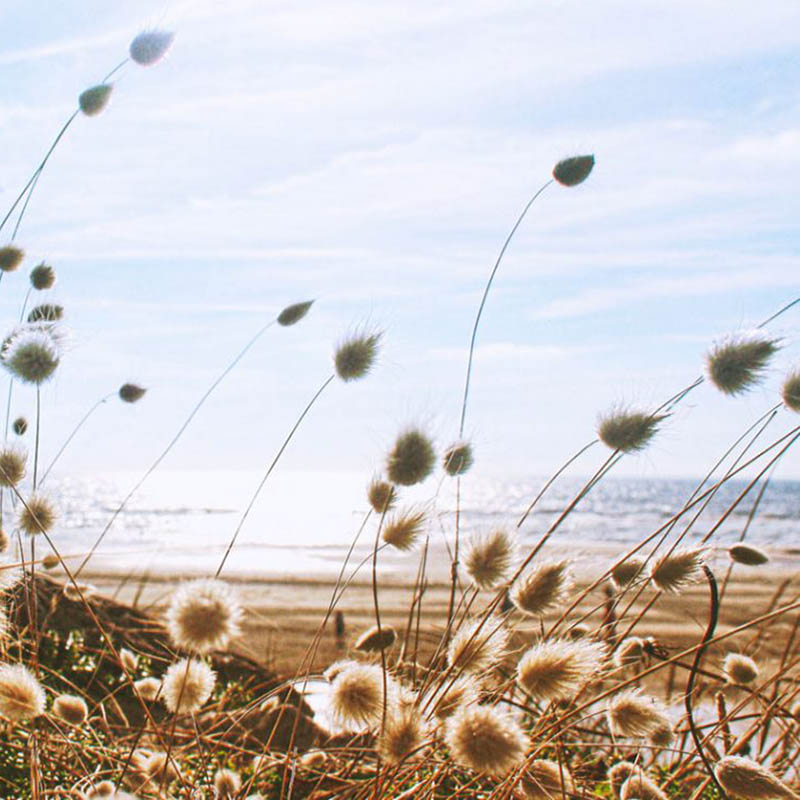
Between Fréjus and Saint-Aygulf stretches a beach of about 8km, backed by a still-wild line of dunes. On its quietest section, the Plage des Esclamandes near the Villepey lagoons, the town of Fréjus has set up a naturist area open from June to September.
- Access: avenue de la Corniche d’Azur; reach the area by walking along the shore from the car park, or from the Fréjus end of the car park.
- Combine with: the area connects with the path through the Villepey lagoons nature site.
- Getting there: the town encourages public transport, cycling and walking.
- Safety: the beaches of Fréjus are lifeguarded in season, from the first Friday in June to the third Sunday in September, 9am to 7pm. The town does not specify a lifeguard post dedicated to the naturist area, so locate the nearest one when you arrive.
Which beach to choose?
- For total immersion: the Levant, where naturism is part of village life.
- For a cove in the shade of the pines: Le Layet, at the foot of the Corniche des Maures.
- For long walks on the sand: Pampelonne, staying within the signed areas.
- For a backdrop of dunes: Saint-Aygulf, a stone’s throw from the Villepey lagoons.
- To combine swimming and hiking: L’Escalet and the Cap Taillat path.
And elsewhere on the coast?
Other coves, in the calanques or on the eastern Riviera, have a naturist reputation. As there is no clearly published municipal framework for them, we have not included them here. Before settling in, check with the local town hall or the French Naturist Federation.
Where to stay
The village of Héliopolis, on the Levant, lets you extend your stay on the island. On the mainland, Le Lavandou and Cavalière, Ramatuelle and Saint-Aygulf offer hotels, B&Bs and campsites.
Our hand-picked campsites in the area, on Yes I Camp: La Tuquette, naturist campsite (Fayence).
See also all naturist campsites on Yes I Camp.
Further reading
- The secret beaches of the French Riviera
- Bormes, Le Lavandou and the Maures: an insider’s guide
- The secret Gulf of Saint-Tropez: an insider’s guide
- Porquerolles, Port-Cros and the Golden Isles: a practical guide
- Secret swimming in the Calanques
FAQ
Is naturism allowed on every beach on the French Riviera?
No. Local councils designate the authorised areas by bylaw, and signs mark them on the beach. Outside these areas, nudity is not permitted.
How do you get to the Île du Levant?
By boat from Le Lavandou harbour (Vedettes Îles d’Or and Le Corsaire), a crossing of about 35 minutes. Sailings are frequent from May to September and rarer the rest of the year.
When is the Saint-Aygulf naturist area open?
From June to September. It is on Les Esclamandes beach, near the Villepey ponds, between Fréjus and Saint-Aygulf.
Can you go naturist at Pampelonne?
Yes, but only in the areas authorised by Ramatuelle’s municipal bylaw, which are signposted on the beach.