

 Lionel

On the Riviera, the most beautiful gardens are not always the busiest. Some are free but closed at weekends, others only open for guided tours, and a few only during Menton’s month of gardens. Here are 12 gardens you can genuinely visit, from Hyères to the Italian border, with the best season for each.
Updated October 2026
At a glance
- Where: from Hyères to Menton, with a detour into the Grasse area.
- When: February to June for the flowers; winter for citrus fruit and succulents.
- Access: most gardens can be reached by bus or train; several are free.
- For whom: plant lovers, photographers and families looking for shade and calm.
1. Le Plantier de Costebelle, Hyères
A private garden with the “Jardin remarquable” (Remarkable Garden) label, created in 1857 by Baroness Pauline Husson de Prailly. Chilean palms grow alongside Cyprus strawberry trees. Queen Victoria stayed here for five weeks in 1892, and the writer Paul Bourget made it his home from 1896.
- Visiting: by appointment only, with a guided tour by the owners (about an hour).
- Bonus: Hermann’s tortoises, a protected species, roam freely along the paths.
- Best time: spring.
2. Parc Sainte-Claire, Hyères
This terraced garden of around 6,500m² looks out over the Hyères roadstead. The American novelist Edith Wharton lived in the villa from 1927 to 1937. The house, built by Olivier Voutier – the officer who discovered the Venus de Milo – is now the headquarters of the Port-Cros National Park.
- Access: free entry, open every day, right in the town centre.
- Bonus: a footpath links it to Parc Saint-Bernard, on the hill of the Villa Noailles.
- Best time: March to May, and late in the day in summer for the view over the bay.
3. Domaine du Rayol, Rayol-Canadel-sur-Mer
Facing the Hyères islands, this 20-hectare estate belongs to the Conservatoire du littoral (the national coastal protection agency). On 7 hectares of it, the landscape designer Gilles Clément created the Jardin des Méditerranées (Garden of the Mediterraneans). Along some 5km of paths you travel from California to Chile, and from South Africa to Australia and the Canaries.
- Opening: every day of the year except 25 December.
- Access: free car park in front of the site, and a second one 400m away along the greenway. By bus, line 878 to the Rayol tourist office stop, then about 15 minutes on foot.
- Best time: spring for the flowers; allow at least 1 hour 30 for your visit.
The estate also offers an underwater trail, guided tours and musical evenings in summer: see the programme at domainedurayol.org.
4. Château de la Napoule gardens, Mandelieu-La Napoule
More than 4 hectares by the sea, laid out in the early 20th century by Marie Clews around a neo-medieval château. Fountains, topiary and contemporary sculpture open onto the bay of Cannes. The garden holds the “Jardin remarquable” label.
- Access: railway station and bus stop less than 500m away.
- Bonus: artists regularly exhibit here.
- Best time: the garden can be visited in any season; come in spring for the flowers.
5. Les Jardins du MIP, Mouans-Sartoux
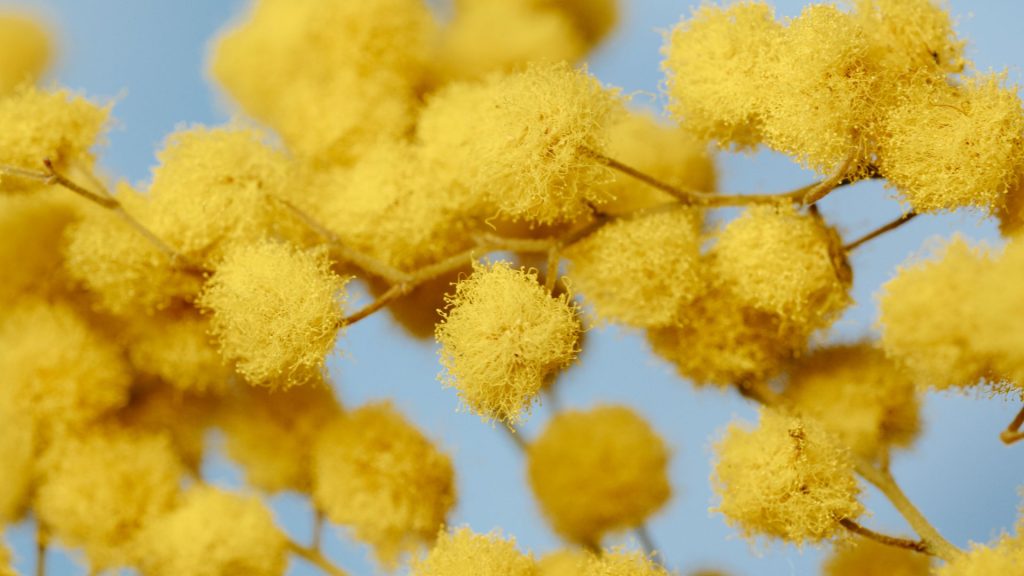
The plant conservatory of Grasse’s International Perfume Museum (Musée International de la Parfumerie). Across more than 2 hectares, around an old canal, you can see the plants that made the Grasse area famous growing in open fields: centifolia rose, jasmine, tuberose, lavender, geranium, broom and orange blossom. The aromatic collections are arranged by scent family, from citrus to musky notes.
- Label: “Jardin remarquable” since April 2022.
- Opening: check the opening periods on the Grasse museums’ website (museesdegrasse.com) before you go.
- Best time: May for the centifolia rose, late summer for the jasmine.
6. Villa Thuret botanical garden, Antibes
Gustave Thuret began his research here in 1857. Owned by the State and managed by INRAE (the French national research institute for agriculture, food and the environment), its 3.5 hectares form an English-style garden with around 1,000 species of exotic trees and shrubs. The plants are studied here for their response to climate change. George Sand considered it the most beautiful garden she had ever seen.
- Opening: Monday to Friday, closed at weekends.
- Access: free for individual visitors. Bus line 2, “Empel” stop.
- Best time: all year round, though spring and autumn are gentler for walking.
Insider tip: the Villa Thuret opens on a Sunday just twice a year, for the Rendez-vous aux jardins garden festival (first weekend in June) and the European Heritage Days (third weekend in September). The rest of the time, come on a weekday: it is free and often deserted.
7. Villa Ephrussi de Rothschild, Saint-Jean-Cap-Ferrat
Nine gardens unfold around the villa: Spanish, Florentine, stone, Japanese, exotic, Provençal, French formal, the Sèvres garden and the rose garden. Pools, cascades and colonnades set the rhythm of the visit.
- Opening: every day, with hours that vary by season.
- Access: free car park at the entrance; Lignes d’Azur bus 15, “Passable Rothschild” stop. Tickets can be booked at villa-ephrussi.com.
- Best time: April–May for the rose garden – the rose was Baroness Béatrice Ephrussi de Rothschild’s favourite flower.
8. Èze exotic garden
Clinging to the ruins of the medieval fortress at the top of the village, 429m above the sea. Cacti, aloes and agaves from Central America and beyond share the space with sculptures by Jean-Philippe Richard. The panorama stretches to Saint-Tropez – and to Corsica on a clear day.
- Access: bus 82 or 602 from Nice, or 83 from Beaulieu-sur-Mer via Èze-sur-Mer station.
- Bonus: a “zen area” with loungers facing the sea.
- Best time: winter, on a dry, clear day, when you can see furthest.
To walk up from the sea, the Nietzsche path starts from the seafront, two hundred metres from the station.
9. Palais de Carnolès garden, Menton
Around the former summer residence of the Princes of Monaco, a hectare of citrus trees: 137 varieties of orange, bitter orange, lemon, kumquat and pomelo. The collection is recognised as a national collection.
- Access: open to all and free, every day. At the entrance to Menton coming from Monaco, with the station and buses less than 500m away.
- Best time: December to March, when the trees are laden with fruit.
10. Val Rahmeh botanical garden, Menton
A hectare and a half of shady paths, fountains and pools, attached to the National Museum of Natural History (Muséum national d’Histoire naturelle). Around 1,700 taxa grow here, including food, medicinal and “magic” plants. It is home to Sophora toromiro, a tree now extinct in the wild on Easter Island.
- Opening: all year round, closed on Tuesdays.
- Access: station and buses less than 500m away.
- Best time: summer, for the lotuses and water lilies in the pond.
11. Jardin Maria Serena, Menton
By the sea, close to the Italian border, this garden is said to be the mildest in France. It holds a major collection of palms and cycads, as well as a dragon tree. The villa, dating from 1886, is thought to have been built to plans by Charles Garnier.
- Visiting: guided tours only, booked through Menton’s department of outstanding gardens (direction des jardins d’exception).
- Good to know: steep slopes and lots of steps.
- Best time: winter, when the microclimate makes all the difference.
12. La Serre de la Madone, Menton
The British Major Lawrence Johnston, already the creator of Hidcote in England, laid out these terraces between 1924 and 1939. The garden is a listed historic monument with the “Jardin remarquable” label, and belongs to the Conservatoire du littoral. It holds three national collections: Araliaceae, Pittosporaceae and Proteaceae.
- Opening: Tuesday to Sunday, from April to October and then from January to March; closed on Mondays and in November and December.
- Access: route du Val de Gorbio, bus stop less than 500m away. Guided tours can be booked through the Menton tourist office.
- Best time: spring.
Insider tip: in Menton, the private gardens of Les Colombières, created by Ferdinand Bac, and the Clos du Peyronnet open only for guided tours, organised by the tourist office during the Festival and Month of Gardens. The Fontana Rosa garden, with its ceramics bearing the likenesses of great writers, can also only be visited with a guide. Keep an eye on the tourist office’s programme.
Where to stay
To take in Menton’s gardens one after another, base yourself in Menton or Roquebrune-Cap-Martin. Hyères and Le Lavandou suit the Rayol and the Var gardens; Antibes or Cannes work for Thuret, La Napoule and the Grasse area. B&Bs in old villas and small town-centre hotels let you do everything by train and bus.
Our hand-picked campsites in the area, on Yes I Camp: La Vieille Ferme (Villeneuve-Loubet) and Le Parc des Maurettes (Villeneuve-Loubet).
See also all our campsites in Provence-Alpes-Côte d’Azur on Yes I Camp.
Further reading
- In the footsteps of the Riviera’s painters
- The most beautiful hill villages of the French Riviera
- Menton, Roquebrune, Èze and Monaco: the Riviera to the Italian border
- Cannes, the Lérins Islands and Grasse beyond the glitz
- Natural wonders of the French Riviera
FAQ
Which Riviera gardens are free?
The Parc Sainte-Claire in Hyères, the citrus garden at the Palais de Carnolès in Menton and the Villa Thuret botanical garden in Antibes (on weekdays) are all free to enter.
What is the best season to visit the Riviera’s gardens?
February to June for flowers. Winter suits the citrus and succulent gardens, such as the Palais de Carnolès in Menton or the Jardin Exotique in Èze.
Is the Villa Thuret open at weekends?
No, it opens Monday to Friday. The only exceptions are the Rendez-vous aux Jardins (first weekend in June) and the European Heritage Days (third weekend in September).
Which Menton gardens can only be visited with a guide?
The Jardin Maria Serena, plus the private gardens of Les Colombières, the Clos du Peyronnet and Fontana Rosa. Tours are run by the town or the tourist office.