



 Lionel
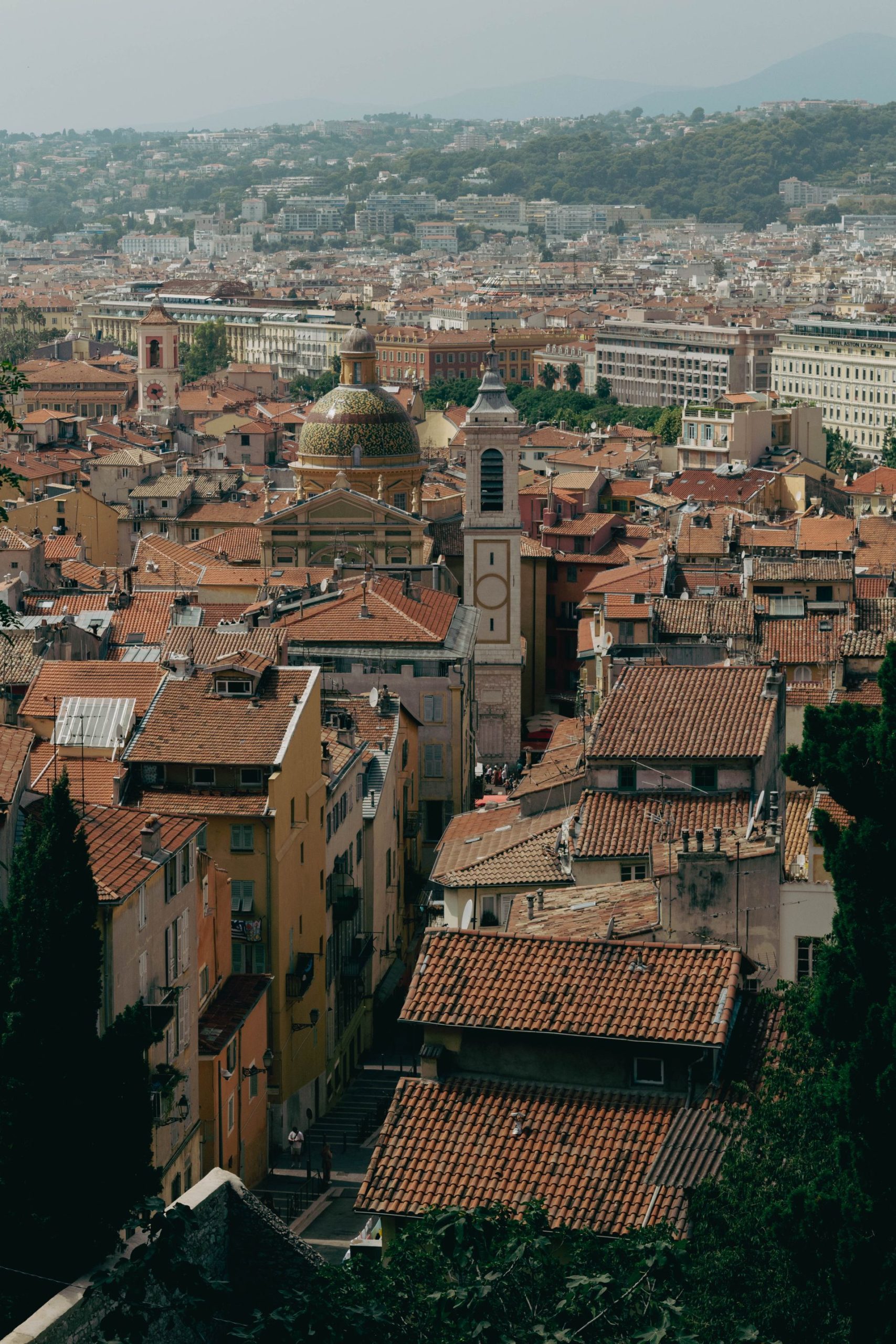
Nice is best explored back to front. Climb Castle Hill as the gates open, shop at the Libération market rather than only on the Cours Saleya, then head for hill villages less than an hour away by bus or train, up where the tour coaches don’t go. The secret of Nice and its hinterland is that you can see almost all of it without a car.
Updated October 2026
At a glance
- Where: Nice and its bay, Villefranche-sur-Mer, Saint-Jean-Cap-Ferrat, Saint-Paul-de-Vence, Vence, and the hilltop villages of the hinterland: Peillon, Peille, Coaraze, Lucéram and Tourrettes-sur-Loup.
- When: all year round. Autumn and winter are perfect for the villages; December for the nativity scenes of Lucéram; October to March for the violets of Tourrettes.
- Getting there: Lignes d’Azur trams and buses across the metropolitan area, TER regional trains along the coast and up the Paillon valley, and the Chemins de Fer de Provence railway into the hinterland.
- Best for: lovers of markets and Niçois cooking, walkers, modern-art enthusiasts and car-free travellers.
- Good to know: several key sites have seasonal closures or close over lunch. Check the day before.
Why this area rewards taking your time
Nice is a big city, but a compact one. Within a few kilometres you go from an old Genoese-style quarter to a headland of villas, then to villages clinging to the rock. For centuries the city belonged to the County of Nice, which only became part of France in 1860. That past shows everywhere: in the local language, Nissart, in the cooking and in the Baroque churches.
Behind the city, the hinterland climbs very steeply. The Paillon and Var valleys push north towards the Alps, and every ridge carries its own hilltop village.
Nice: the must-sees, done differently
Castle Hill, at opening time
This is where it all began: a first settlement founded by Greek colonists from Massalia (ancient Marseille), then a fortress razed on the orders of Louis XIV. The city turned it into a public park in 1882. Today it is a terraced park with cool woodland, a waterfall and views over the Baie des Anges, Old Nice and the port.
- Opening hours: daily, 8.30am to 6pm from October to March, and until 8pm from April to September, according to the tourist office.
- Price: free entry.
- Access: via Rue des Ponchettes, Rue de Foresta or the Montée Montfort.
- Facilities: playgrounds, a lawn, picnicking allowed, toilets and refreshment kiosks.
Insider tip: go up at 8.30am, as it opens. The light comes from the east and falls full on the Promenade des Anglais, the terraces are deserted, and you come down just in time for the Cours Saleya market.
Old Nice and the Cours Saleya
The Cours Saleya changes character from day to day. The flower market is held here Tuesday to Sunday, all year round. On Mondays, the antique and bric-a-brac dealers take over. In summer, an evening art and craft market moves in after dark. The narrow, shady lanes of Old Nice (Vieux-Nice) next door are best explored early in the morning, before the groups arrive.
The Libération market, where Niçois shop
Less photographed than the Cours Saleya, the Libération market is where the people of Nice do their shopping. It spreads around Avenue Malausséna, Place de Gaulle and the old Gare du Sud station. It is open Tuesday to Sunday, 6am to 12.30pm, according to the tourist office. Fruit, vegetables, growers from the hinterland: this is where you see what is really in season.
Socca, eaten piping hot
Socca is a thin pancake made from chickpea flour, water, olive oil and salt. It even has an official recipe, the one set by the “Cuisine Nissarde” label. The very runny batter is spread on a large copper tray about 50 cm across and baked in a very hot oven, ideally wood-fired. It should come out golden and crisp, sometimes a little charred in places. It is cut into pieces, peppered and eaten straight away, on a sheet of paper.
The rule of thumb: choose a place where it comes out of the oven in front of you. Socca that has been sitting around loses all its appeal.
Mont Boron, a forest in the city
East of the port, the Mont Boron forest park covers 57 hectares, with about ten kilometres of paths. The hill, stripped of trees in the Middle Ages, was replanted in the 1860s. The park is open all year round and free, with views over the Villefranche harbour and the Baie des Anges.
Beaches and coves
Nice’s beaches are pebbly and very busy in summer. For clear water, look east: the Villefranche harbour and Cap-Ferrat.
- Cap de Nice: between the port and Mont Boron, the rocky shore hides small spots for getting into the water, reached by the coastal path (see below). Water shoes recommended.
- Plage des Marinières, Villefranche-sur-Mer: easy to reach, with showers and toilets, and lifeguards in season. There is a car park with about 280 spaces nearby.
- Plage de Passable, Saint-Jean-Cap-Ferrat: the start and finish of the walk around the cape, facing the Villefranche harbour.
More little-known bays along the whole coast are gathered in our guide to the secret beaches of the Côte d’Azur.
Villefranche-sur-Mer, the deep-water harbour
Villefranche nestles at the head of one of the deepest natural harbours in the Mediterranean, fortified since the 16th century. The village tumbles down in steps to the fishing port.
- Rue Obscure: a vaulted medieval passage, almost underground, running beneath the houses of the old town.
- The Citadelle Saint-Elme: built in the 16th century, it houses several museums, including the Volti and Goetz-Boumeester museums.
- The Chapelle Saint-Pierre: a small harbourside chapel decorated by Jean Cocteau.
- The food market: Wednesdays, 8am to 1pm, in the Jardin François-Binon, weather permitting.
Insider tip: the harbour welcomes cruise ships from April to November, and an extra market sets up on the days they call. If you want calm, ask the tourist office for the cruise calendar and pick a day with no ship in port.
Saint-Jean-Cap-Ferrat, the cape of villas
Cap-Ferrat is a peninsula of pines and private gardens. The best way to discover it is on foot, along the coastal path, which is open to everyone.
The Villa and Gardens Ephrussi de Rothschild
Built in the Belle Époque for Béatrice Ephrussi de Rothschild, the villa looks over both the Villefranche harbour and the Bay of Beaulieu. Its nine gardens follow one another along the ridge: Spanish, Florentine, stone, Japanese, exotic, rose garden, Provençal, French formal and Sèvres.
- Opening 2026: daily, 10am to 6pm from 1 February to 1 November (7pm in July and August); 10am to 4.30pm in winter, and until 6pm at weekends, on public holidays and during French school holidays. A few exceptional closures are announced, including 14 and 25 December 2026.
- Prices 2026: €18 full price, €12 reduced, free for under-7s. Booking online is recommended.
- Time needed: allow about 2 hours.
- Access: Lignes d’Azur bus no. 15, stop “Passable Rothschild”, or about 30 minutes on foot from Beaulieu-sur-Mer station. Free parking at the entrance.
Walks
The Cap de Nice path, from the port to Villefranche
It starts at the Port Lympia and runs to the Port de la Darse in Villefranche-sur-Mer, along the foot of Mont Boron. The tourist office gives 6 km and about 2 hours 30 minutes one way. Coming back is easy by TER from Villefranche station, or by bus.
Around Cap-Ferrat
From the port of Saint-Jean-Cap-Ferrat, there are two options, according to the tourist office:
- Pointe Saint-Hospice: 1.8 km, about 40 minutes.
- The full cape: 4.8 km, about 1 hour 30 minutes, to the Plage de Passable.
The path is rocky in places and may be closed in bad weather. Don’t attempt it in heavy seas.
From Peillon to Peille on the old mule tracks
The two villages are linked by old mule paths. The full loop is a proper day’s walk, of moderate difficulty. Shorter, the Lourquière circuit, about 11 km, starts from La Grave de Peille station: it climbs in the shade of the pines and returns along a path with fine views of Peillon. Walking boots and water are essential.
For more ideas away from the crowds, see our off-the-beaten-track walks and hikes.
Saint-Paul-de-Vence and Vence, artists’ country
Saint-Paul-de-Vence, before or after the crowds
Encircled by ramparts, the village is entered through a monumental gate, then explored along the Rue Grande and its side lanes. The Colombe d’Or inn, open under that name since 1932, welcomed Matisse, Picasso, Léger and Chagall. The Fondation Maeght, devoted to modern and contemporary art, is close to the village. Near the bell tower, there is often a game of boules under way.
South of the village, the cemetery overlooks the Mediterranean. Marc Chagall, who lived in Saint-Paul from 1966 until his death in 1985, is buried here, as is the Maeght family.
Insider tip: Saint-Paul is one of the busiest villages on the Côte d’Azur. Come when the shops open or late in the day: the ramparts are lit at nightfall, the lanes empty, and the view over the olive-clad hills is far lovelier without the crowds.
Vence and the Matisse chapel
A few kilometres away, Vence has kept a lively old town. Place du Grand Jardin hosts the markets, the flea market and the festivities. Here you can see a Roman column, one half of an offering from the early 3rd century; the other half stands on Place Godeau.
The Chapelle du Rosaire, designed and decorated by Matisse, who considered it his masterpiece, is the reason for many a trip. Its stained-glass windows colour the white interior differently according to the time of day. An adjoining space displays preparatory works and the liturgical vestments the artist designed.
- Opening hours: Monday to Saturday depending on the period, 10am to 11.30am and 2pm to 5.30pm from March to October, closing at 4.30pm from November to February. The schedule varies: check the chapel’s website.
- Annual closure: 16 November to 7 December 2026 inclusive.
- Price: €7 per adult.
- Address: 466 Avenue Henri-Matisse, Vence.
To follow the painters along the whole coast, read our itinerary in the footsteps of the Riviera’s artists.
The hill villages of the hinterland
Peillon, the eagle’s nest
About 20 km from Nice, Peillon sits on a rocky spur at around 376 metres, above the Paillon valley. Its stepped lanes and vaulted passages have stayed intact. Below the village, the Chapelle des Pénitents Blancs, a listed historic monument, holds 15th-century frescoes by Jean Canavesio. Ask at the town hall (mairie) about visiting arrangements.
Peille, above the valley
Peille is about 26 km from Nice and 19 km from Monaco. By car, leave the A8 motorway at La Turbie (exit 57), then follow the D53. Without a car, there are two options:
- Bus: line 116 links the village with Nice-Vauban every day of the year.
- Train: the Nice–Tende TER line serves La Grave de Peille station, 7 km below the village. No shuttle is listed, so plan to walk or take a taxi.
Coaraze, the village of the sun
At 620 metres and some twenty kilometres from Nice, Coaraze is known for its sundials, most of them contemporary and created by artists. The road there, beyond Contes, follows a deep, winding, narrow valley. Take your time.
Lucéram and its nativity scenes
All year round, Lucéram revolves around its Église Sainte-Marguerite, built in the late 15th century at the top of the village. It holds a celebrated altarpiece of St Margaret and a panel of St Peter and St Paul attributed to Louis Bréa, as well as a treasury of religious silverwork.
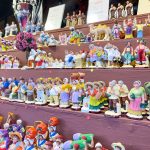
In December, the village is transformed. The 29th nativity trail (circuit des crèches) runs from 1 December 2026 to 3 January 2027: more than 450 traditional nativity scenes, made by the villagers, line the lanes. The trail is free and open every day, 10am to 12.30pm and 2pm to 5.30pm on weekdays, and all day without a break at weekends. On Christmas morning and New Year’s Day morning, it opens in the afternoon only.
To combine Lucéram with other Advent outings, see our selection of Christmas markets and Provençal nativity scenes on the Riviera.
Tourrettes-sur-Loup, the village of violets
Between Vence and Grasse, Tourrettes grows violets on small terraces, the restanques, from October to March. Picking is still largely done by hand. Growers sell their bunches between Christmas and Valentine’s Day. La Bastide aux Violettes, a living museum opened by the commune in 2010, tells the story of this craft.
The Fête des Violettes, first held in 1952, takes place on the first weekend of March. The next edition is announced for 6 and 7 March 2027, with a flower parade (corso fleuri), a flower battle and a craft market.
More villages with character along the whole coast await in our selection of the most beautiful villages of the Côte d’Azur.
The Train des Pignes, up towards the Alps
The Chemins de Fer de Provence link Nice and Digne-les-Bains on a metre-gauge line that climbs the Var valley. It is known as the Train des Pignes. It runs every day, all year round.
- Departure in Nice: the Chemins de Fer de Provence station, 4 bis Rue Alfred-Binet, about ten minutes’ walk from Nice-Ville station. This is not the SNCF (national railway) station.
- Route: 151 km and about 3 hours 20 minutes end to end, with stops such as Villars-sur-Var, Entrevaux and Annot. Only a few trains a day run the whole line.
- Engineering works: between Saint-André-les-Alpes and Digne-les-Bains, the journey is by coach until the works are finished, expected in early 2027.
- Steam train: a heritage train runs on certain dates, mainly between Puget-Théniers and Annot. Booking with the association that operates it is recommended.
Insider tip: there’s no need to go all the way to Digne. A day return from Nice to Entrevaux is enough to discover the fortified town of Entrevaux and the Var valley. Before you go, check the state of the line on the Chemins de Fer de Provence website: rockfalls can cut off part of the route.
Food and markets
According to the Nice Côte d’Azur tourist office listings. Times can change, so check before you travel.
- Nice, Cours Saleya: flower market Tuesday to Sunday; flea market on Mondays; evening craft market in summer.
- Nice, Libération market: Tuesday to Sunday, 6am to 12.30pm.
- Villefranche-sur-Mer: Wednesdays, 8am to 1pm, Jardin François-Binon, weather permitting.
- Vence: markets and flea market on Place du Grand Jardin; ask the tourist office’s Vence branch for days and times.
To try: socca, pissaladière (onion tart with anchovies and olives), petits farcis (stuffed vegetables), and olive oil from the hills. In Tourrettes, in season, the violets turn up candied or in chocolate at local confectioners.
To understand these traditions better, read our feature on culture and traditions of the Côte d’Azur.
When to go (and why the off season is ideal)
- October–November: the sea is still mild in early October, the light is sharp and the villages are quiet. Note that the Chapelle du Rosaire is closed from 16 November to 7 December 2026.
- December: the Lucéram nativity trail, the first violets in Tourrettes, and Old Nice markets without the crowds.
- January–March: the best time for the hill villages and the trails. The violets bloom until March and the Fête des Violettes is held in early March.
- April–June: gardens in flower, swimming from June.
- July–August: packed beaches and busy villages. Visit Saint-Paul early or late, and book your visits in advance.
More ideas for the low season in our article on the Riviera in winter.
Getting around and parking
- Lignes d’Azur trams and buses: the tourist office lists the single-journey Solo ticket at €1.70, with one-, two- and seven-day passes. Paper tickets have been replaced by a rechargeable card, to be validated every time you board. Journeys to the airport have a separate fare. Check current fares on the Lignes d’Azur website.
- Useful buses: line 15 for the Villa Ephrussi, line 116 for Peille.
- TER: the coastal line serves Villefranche-sur-Mer and Beaulieu-sur-Mer; the Nice–Tende line serves La Grave de Peille.
- By car: parking in central Nice is difficult and expensive. Leave the car at a park-and-ride and take the tram. For the hill villages a car is still handy, but the roads are narrow and winding, and parking is below the old villages, which are explored on foot.
Where to stay
For a car-free stay, base yourself in Nice near a tram stop, or in Villefranche-sur-Mer on the TER line; for the villages and the artists, choose Vence or Tourrettes-sur-Loup, with their guesthouses and gîtes (self-catering cottages), and for the hinterland, the gîtes of Peille or Lucéram.
Our hand-picked campsites in the area, on Yes I Camp: La Rivière (Cagnes-sur-Mer), Le Parc des Maurettes (Villeneuve-Loubet), La Vieille Ferme (Villeneuve-Loubet), La Ferme Riola (Nice hinterland) and Les Pinèdes (La Colle-sur-Loup).
See also all our campsites in Provence-Alpes-Côte d’Azur on Yes I Camp.
FAQ
Does the Train des Pignes still run from Nice?
Yes. The Chemins de Fer de Provence leave every day from the station on Rue Alfred-Binet in Nice, which is separate from the SNCF station. Between Saint-André-les-Alpes and Digne-les-Bains, a coach replaces the train until the works are finished, expected in early 2027. Check the state of the line before you go.
Which days is the Cours Saleya market on?
The flower market is held Tuesday to Sunday, all year round. On Mondays it gives way to the flea market. In summer, an evening craft market sets up after dark. For a more local market, try the Libération market, Tuesday to Sunday mornings.
Can you visit the hill villages without a car?
Partly. Bus line 116 runs up to Peille from Nice-Vauban, and the Nice–Tende TER serves La Grave de Peille, the starting point for walks to Peillon. For Coaraze or Lucéram, look into the less frequent departmental bus lines.
When can you visit Matisse’s Chapelle du Rosaire in Vence?
Depending on the period, it opens Monday to Saturday, with separate morning and afternoon sessions. It is closed from 16 November to 7 December 2026. As the schedule varies, check the chapel’s website before you travel.
Further reading
- Menton, Roquebrune, Èze and Monaco: the Riviera to the Italian border
- Cannes, the Lérins Islands and Grasse beyond the glitz
- The secret Estérel: red-rock coves, trails and villages
- The secret Gulf of Saint-Tropez: an insider’s guide
- The most beautiful hill villages of the French Riviera
- In the footsteps of the Riviera’s painters
- Christmas markets and Provençal nativity scenes on the Riviera